#26. It’s (Almost) Showtime….


Image

Can you spell  P R O C R A S T I N A T E ?

Procrastination. It’s one of those constant challenges that lurk under my bed, along with the ever-present impostor syndrome that I struggle with. (I started writing this blog to fight this stuff.) I know myself well enough to know that if it weren’t for deadlines, I might not get anything big accomplished. Which is why I feel so fortunate to have them, big fat deadlines. The current one looming  (which I’ve had on the calendar for the past couple of years) is Friday, April 25th, the date of my exhibition opening at Alexey von Schlippe Gallery of Art.

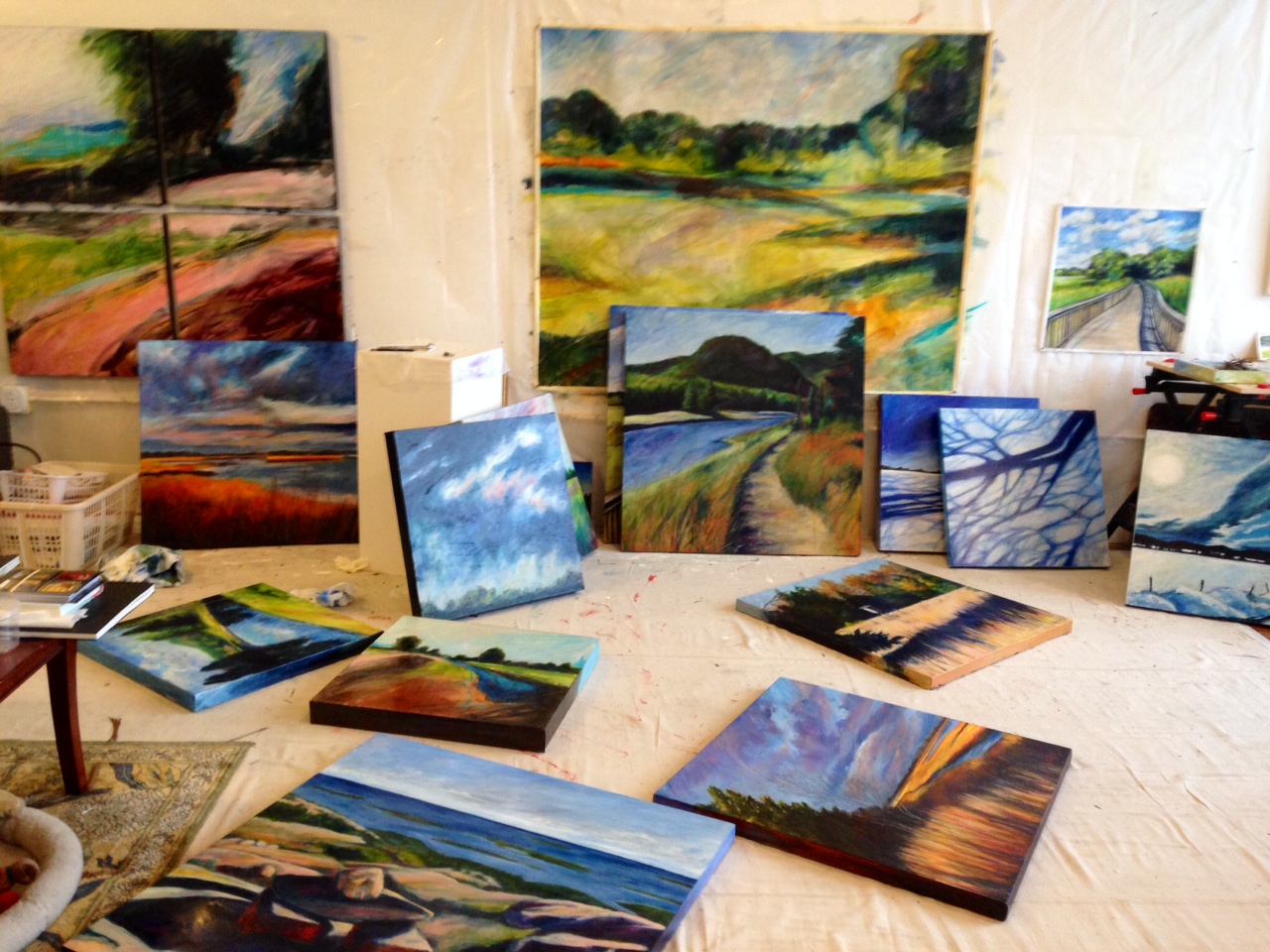
Actually, the real deadline is on Tuesday, the 22nd. That’s when I deliver the work to the gallery, which is about an hour away. I’ve already reserved the UHaul van, and yesterday most of the paintings got wrapped up and taped, in heavy plastic sheeting. Still need to put wires on about 11 paintings… So far it looks like 30 paintings will be installed, from big (53×65”) to small (10×10”), although if I have it together, one more little painting will be finished by Tuesday.

Image

a bunch of paintings about to be wrapped (typical studio, although usually they are not scattered all over the floor)

I’d love to hear from you about how you work with deadlines and establish goals. And if you happen to be anywhere near Groton CT before June 7, maybe make a side trip to the AvS gallery, and check out my show there… it’s an amazing place to visit, a huge stone mansion, with a gorgeous sculpture path along the water (slideshow— you can advance the images manually) and beautiful grounds and ocean views. Worth a trip…Image

P.S. The gallery has four rooms, and there are three other artists showing in the other rooms. Here is the link to preview the show.

#25. What to do with OLD ART? (suggestions welcome) part I

Image

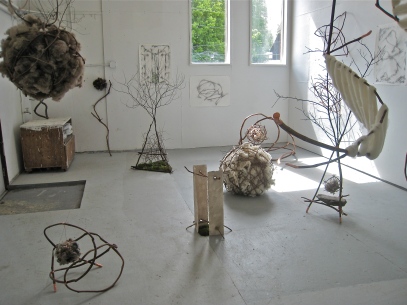
View of branch/fleece sculptures in my studio at Vermont Studio Center, 2008

All that art that has been made…. A blessing and a curse. Why do we make it? (That’s a rhetorical question.) Years of art-making = a lot of old art. The worst is the big stuff, the awkward mixed-media sculpture, the fragile stuff, the found object assemblages, the large paintings, not to mention the framed things under glass.  

It’s shocking how it multiplies.. the older the artist gets, the more old art there is.
Image

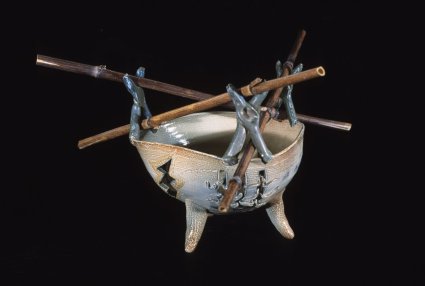
“A New Bamboo Cross Statement” salt-fired porcelain, black bamboo.
16″ diam. x 18″ h. 1977 ©2014 Karen Rand Anderson

Some years after graduating from art school (where I majored in ceramics) I stopped making art. For 10 years, when I became a wife, then a mother, from 1985-1995, I focused on life without art-making (however, there was still plenty of old art to haul around.) And then I reclaimed who I was, who I am. I started making art again (it saved my sanity) and the work slowly began to pile up— pastels, paintings, figure drawings, then mixed media collages, and assemblages, and then sculpture, and then graduate school, and whoa!~ ! 
Image

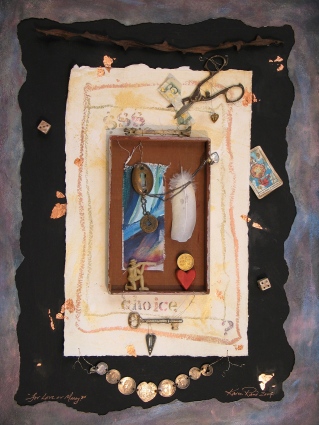
“For Love or Money” mixed media under glass, 24x35x3″, 2004. ©2014 Karen Rand Anderson

I recently had to take full responsibility for many years-worth of my old work, loads of old art which I had conveniently forgotten about, stored at my old home. The past several weeks have been a stressful marathon of clearing out my old home and studio, which was just sold. A bittersweet event. Though I have not lived there for the past four years, the place still harbored a lot of my old art (and art books and art supplies, not to mention memories) My ex-husband and I designed and built it, in 1995, and the amount of artwork that was still there was overwhelming. 

It was not only my own work I had to determine what to do with, but that of my two daughters— also artists, both prolific (think large paintings, some of them in the 6×8 foot range, and art school portfolios, and more that I just CAN’T throw out… )  

The questions always remain— is it good art? Maybe, some of it. Meaningful? Maybe to me, on some level, but to others? And does anyone want this stuff? And what the hell does one DO with it all??  
Image

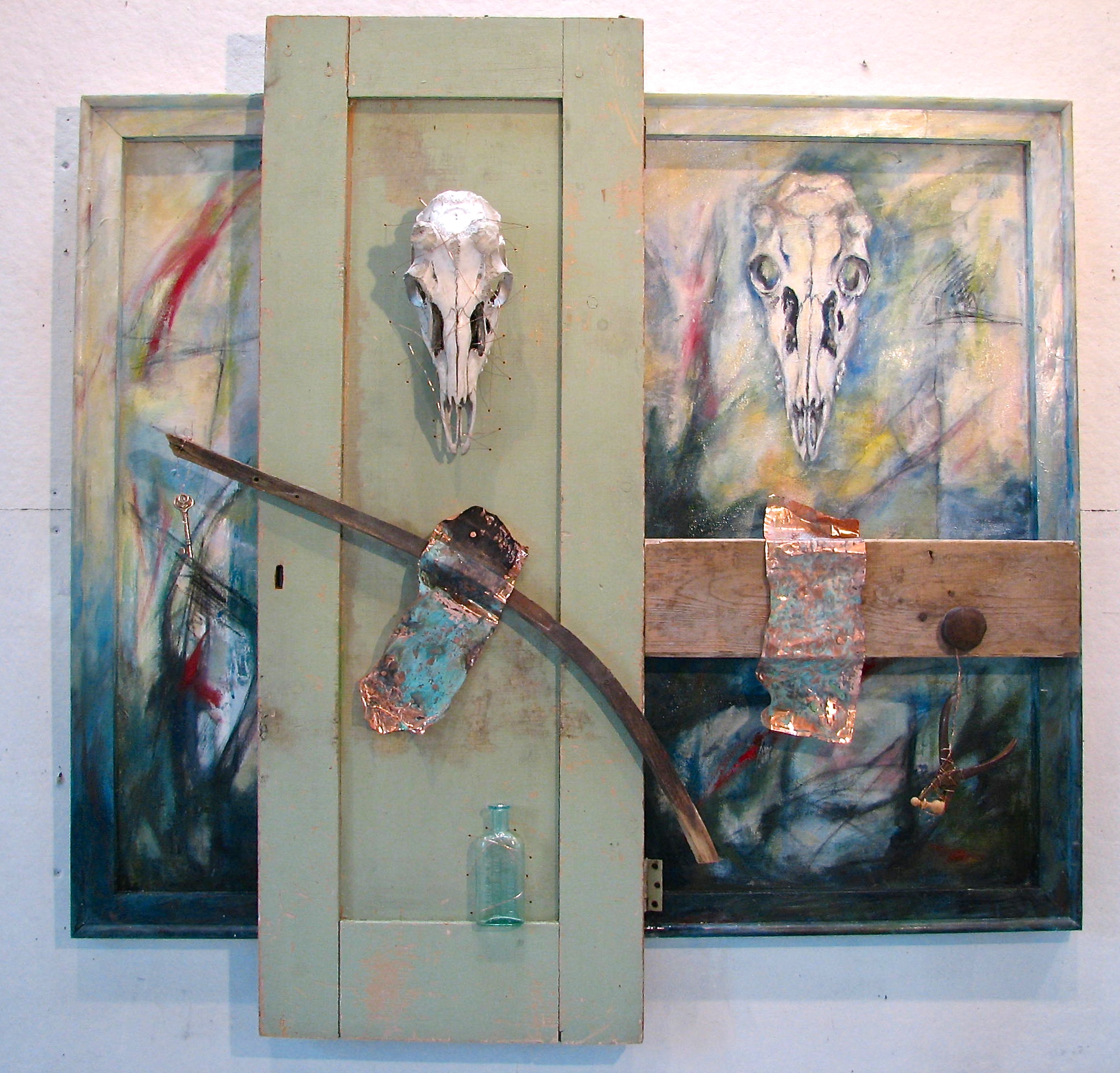
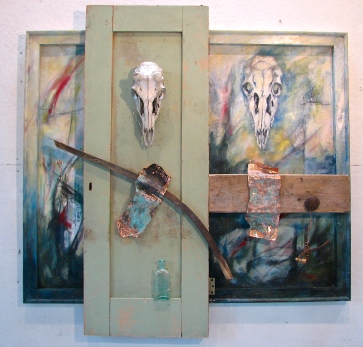
“Door to a Mystery” found object/mixed media assemblage on canvas, 52x58x7″. 2007 (it made great bonfire fodder.) ©2014 Karen Rand Anderson

I did the sacrificial bonfire, tossing bad paintings and sculptures that I once thought were.. well, pretty good.. into the flames. The work was at one time meaningful, as a record of personal creativity, but not worth keeping. In the end, lots of stuff went to the dump. (And my garage, and my basement, and into a storage unit…not to mention my studio, which is overly-full at the moment.) 
Image

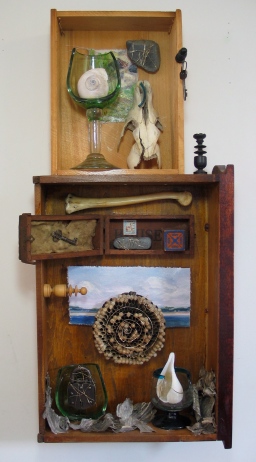
“Very There When Here” mixed-media sculptural assemblage: found objects, natural materials, oil painting. 18x46x10″ 2004. (it found a home at the Stonington dump.) ©2014 Karen Rand Anderson

I also discovered that some paintings were “borrowed”, or lifted,  from my home studio after I moved away… they just disappeared. (there were various people coming and going from that locale. I still am not sure just how much was taken. I keep remembering various pieces, wondering.. hmmmm… what happened to that one?) 
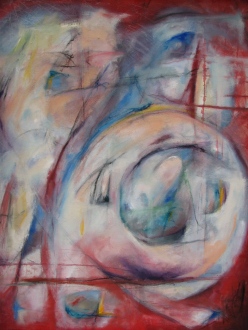
Image

“Gestation” 33×44″ oil on canvas, 2006. (“missing” painting) © 2014 Karen Rand Anderson
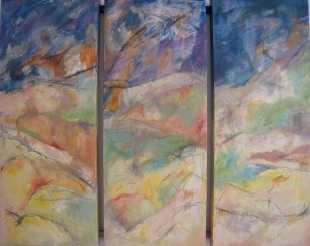
Image

“Energetic Tryptich” 30×36″ mixed media on canvas, 2005 (“missing” painting) ©2014 Karen Rand Anderson


 Some paintings have been donated to non-profits, like Art Connection RI and to galleries with permanent collections, like Alexey von Schlippe Gallery of Art.  
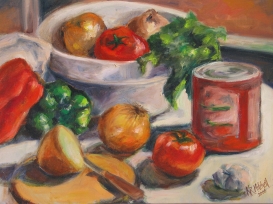
Image

“Spaghetti Sauce Still Life” 24×30″ oil on canvas. 2000. (donated to Art Connection RI, a non-profit which connects art donors and community services) ©2014 Karen Rand Anderson

I’ve donated art countless times to good-cause fund-raisers. (I’m pretty much done with that. I’m tired of being asked to contribute my art, with no recompense, to raise money for “a good cause”) Some pieces have gone to friends who really loved them. 
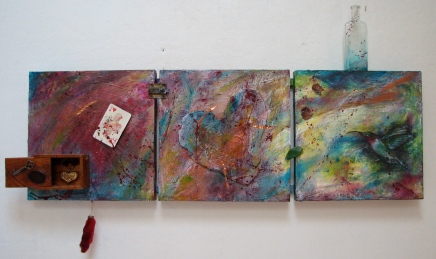


Image

“The Lucky Heart” acrylic, mixed media, found objects on canvas 12x38x6″ 2004. ©2014 Karen Rand Anderson (collection of a friend)

What do you do with old art that is taking up space? Give it away? Donate it? Burn it? Take it to the dump? Put it in storage? If you feel like it, add to the conversation. 
Image

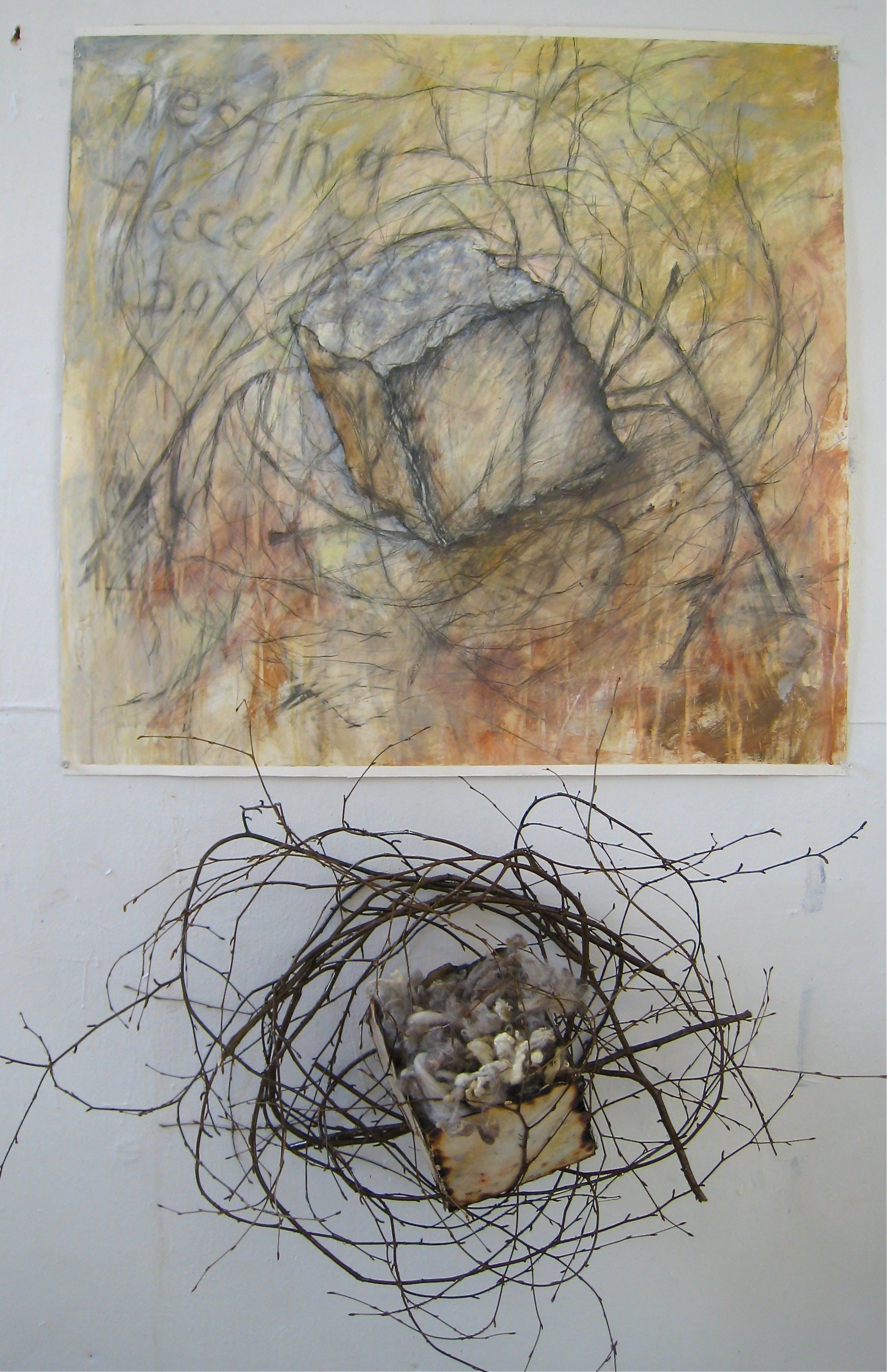
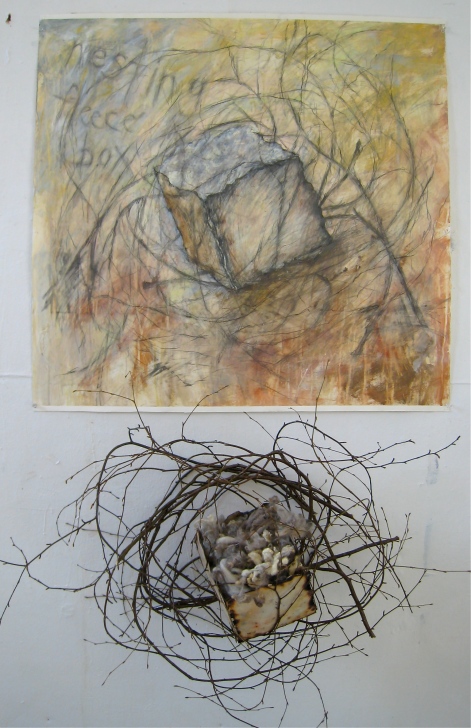
“Nesting Fleecebox” drawing: gouache, acrylic and graphite on paper 30×30″ 2008
sculpture: charred paper, bronze wire, acrylic, black birch branches, sheep’s fleece. 34x27x12″ 2008. (Collection Alexey von Schlippe Gallery of Art, University of Conn.) ©2014 Karen Rand Anderson


#24. Abstraction is in the details (or: painting pieces of paintings)

Painting a piece of a painting…? I’ve played with this idea in the past (not very successfully)– to isolate a small section of a painting, and reference it to make a large painting. If only I could magnify the immediacy and verve that live in those sexy little sections that were produced through spontaneity and intuitive mark-making, and create BIG paintings echoing those same qualities. Sounds easy. Ha.

So my last post showed the large piece I recently finished— “New Territory”.

Image

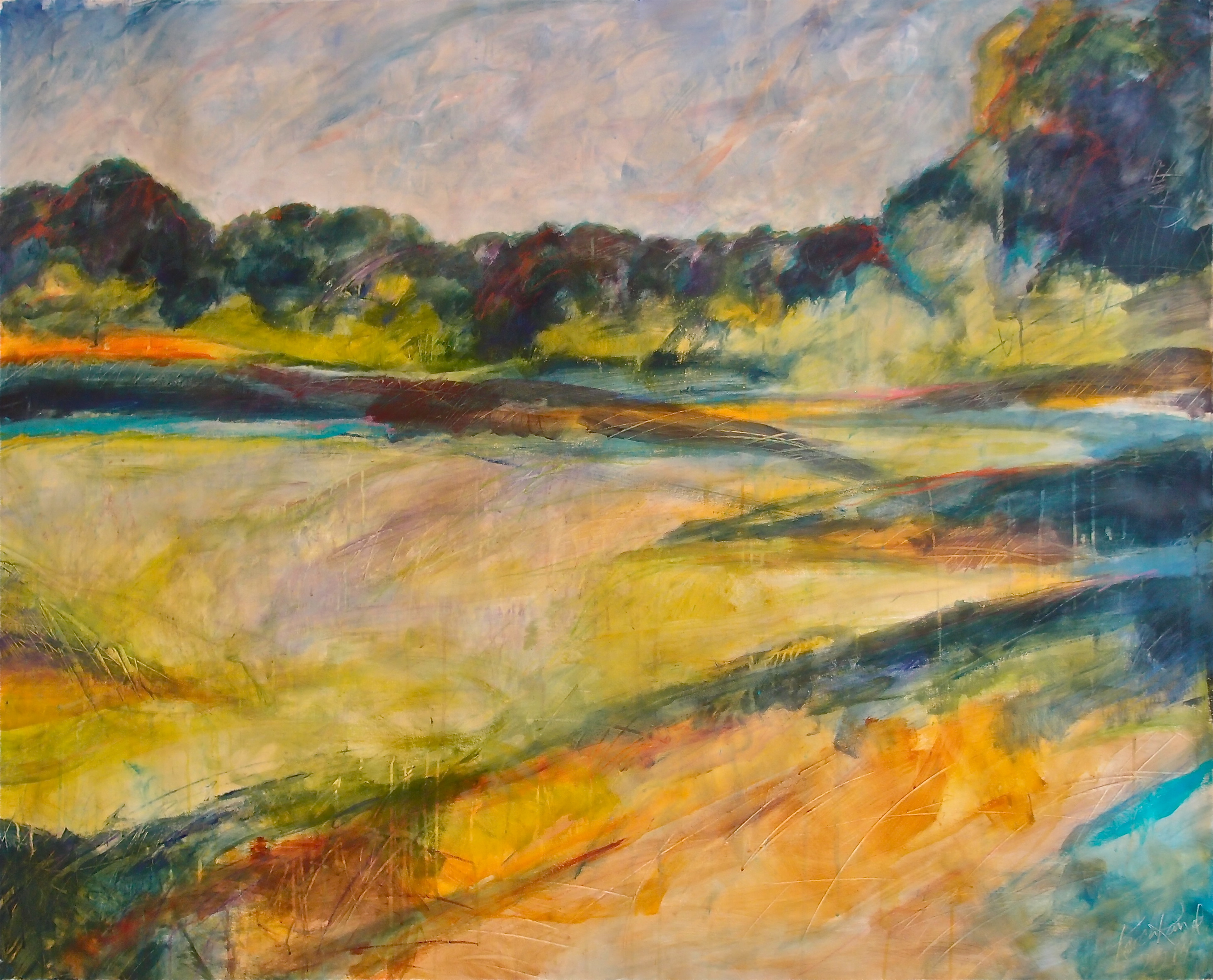
“New Territory. 53×65”. mixed media on Fabriano paper. ©2014 Karen Rand Anderson

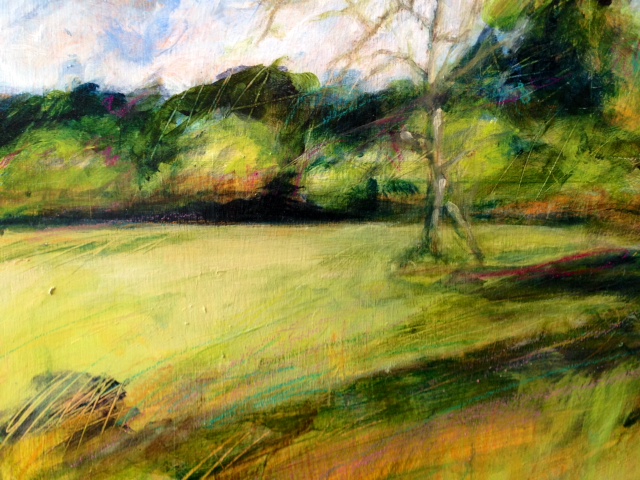
What I didn’t say about it  is that it’s actually referenced from a very small detail from another painting, “Shadow Walk”, 36×36”, mixed media on wood panel. See the loose reference? This detail is about 4×6″. (I left out the dead tree in the 53×65″painting.)

Imagedetail, “Shadow Walk”

Here’s the quick journal sketch: Image

 And here’s the original painting:

Image

Shadow Walk, 36×36″. mixed media on wood panel. ©2014 Karen Rand Anderson

I still like the detail best.

 Abstract expressionist Franz Kline  was able to maintain that freshness from small sketches to gargantuan canvases.  He loved the quality of the mark-making in his small quick brush sketches, and in 1948 when his buddy Willem de Kooning turned him on to the Bell-Opticon opaque projector, he discovered he could project those small energetic strokes as enlarged abstract gestures. He grabbed a big brush, some black house paint, and used the projected images as templates for some very big paintings, which became huge calligraphic statements on the canvas.

ImageFranz Kline in studio, 1954.  Fritz Goro photo.

When Kline first projected one of his small ink sketches onto the wall, this is what he described:

“A four by five inch black drawing of a rocking chair…loomed in gigantic black strokes which eradicated any image, the strokes expanding as entities in themselves, unrelated to any entity but that of their own existence.”

Sounds like abstract expressionism in a nutshell.

Image

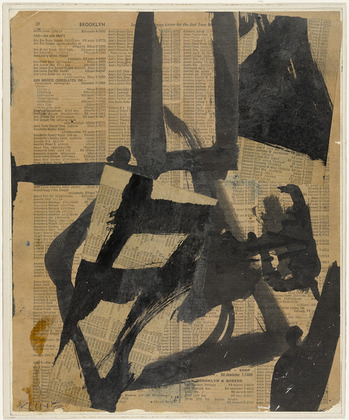
Franz Kline (American, 1910-1962). Untitled II, ca. 1952. Ink and oil on cut-and-pasted telephone-book pages on paper on board. 11 x 9 in. (28.1 x 23 cm). © 2010 The Franz Kline Estate / Artists Rights Society (ARS), New York

 Here’s a short, jazzy little video from the MoMA about Kline’s painting process. 

Keep in mind that the bigger you go, the more you spend— time, materials, energy. Bigger brushes=expensive; bigger canvas or panel= way expensive; more paint (oil or acrylic) = way, way more expensive.  Klein used black enamel house paint because he could get it inexpensively, and loved the workability of it. [Oh well, I’m a coloroholic, I’ll  admit it. Also I use water-based materials. No more toxic stuff in my studio] So, big for me is say, 60 or 70″. Big for Kline was, well, REALLY big.

While Kline sometimes used a projector to magnify his images, I take small digital detail pics with my iPhone and then make awkward sketches of them in my art journal before attempting to translate the image into a larger scale. I wonder. Should I find a projector?

Image

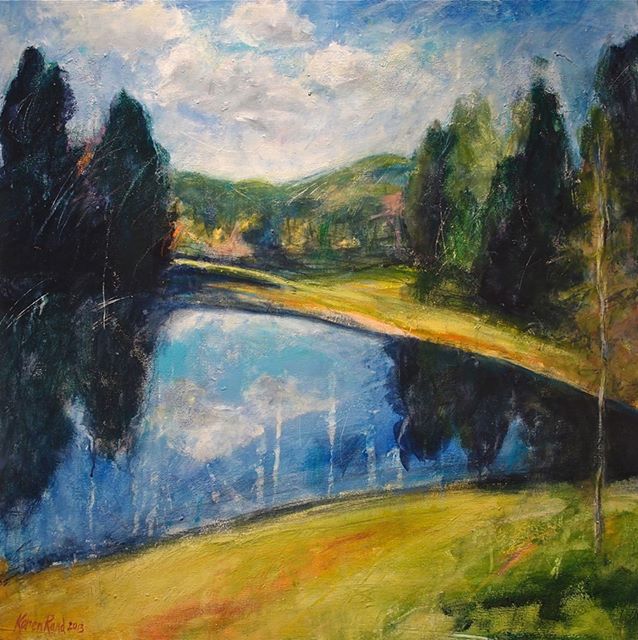
detail, from “Vermont Reflections” On it’s way to becoming a big painting…. maybe.

Image

“Vermont Reflections” 24×24″. mixed media on canvas. ©2014 Karen Rand Anderson